+91 85120 40000 Baraut, Uttar Pradesh 250611 Mon–Sat, 9am–7pm
WhatsApp|

Kidney Care in Baraut — High Creatinine, CKD, Dialysis & Diet Guidance

RIIMS Baraut — integrated kidney care
RIIMS — doctor-led kidney care in Baraut, UP
RIIMS — kidney diagnosis, diet and Ayurveda-supported care
RIIMS — book a kidney consultation in Baraut

Search any disease, symptom or report

Popular:

Complete Care

All your kidney care, in one place

Integrated, doctor-led services — from first consultation to long-term lifestyle support.

1. Video Consultation

Consult expert doctors online

2. Clinic Consultation

Visit our Baraut clinic

3. Kidney Mapping & Report Review

Whole-picture assessment, not one number

4. DNA Kayakalp Protocol Care

Doctor-led, patient-specific care plan

5. RiiMS Renal Plate Diet Planning

Balanced, portion-aware kidney meals

6. Panchakarma Support (supervised)

Ayurvedic support alongside medical care

7. Lifestyle & Activation Coaching

Routine, sleep, activity & stress support

8. Dialysis Guidance

Understand & prepare safely

9. BP & Sugar Care

Protect kidneys from risk

10. Doctors

Connect with nephrology experts

11. Follow-up Care

Ongoing monitoring & support

Why choose RIIMS

Care you can understand and trust

Premium, kidney-focused care that stays honest about what is and isn’t possible.

Kidney-focused institute

A team and process built specifically around nephrology and kidney health.

DNA Kayakalp Protocol care

An integrated D-N-A approach: Diagnosis, Nutrition and Ayurveda-led activation.

Kidney Mapping first

We map your full kidney picture — function, markers, diet and lifestyle — before advising.

RiiMS Renal Plate & lifestyle

Practical, region-aware kidney diet and daily-routine guidance you can follow.

Supervised Ayurveda support

Panchakarma-based support used only alongside medical care, never instead of it.

Ethical patient education

Honest information. No “100% cure” or “stop dialysis” promises, ever.

How consultation works

Four simple, transparent steps

From first message to a follow-up plan — you always know what happens next.

1

Share symptoms & reports

Send your concern and reports over WhatsApp, the form, or in clinic.

2

Kidney Mapping & doctor review

We assess your full kidney picture — function, markers, diet, medicines and lifestyle.

3

Personalized DNA Kayakalp plan

A doctor-guided diet and lifestyle plan shaped to your reports and daily life.

4

Follow-up & monitoring

Ongoing diet, lifestyle and test monitoring, adapted as your condition changes.

Meet our experts

Qualified, caring kidney specialists

View all doctors
Dr. Vikas Gupta, Senior Ayurveda Acharya
Dr. Vikas Gupta Bams Senior Ayurveda Acharya Hindi, English
Dr. Abhishek Gupta, Senior Nephrologist
Dr. Abhishek Gupta Bams Senior Nephrologist Hindi, English
Dr. Rajni Gupta, Senior Ayurveda Acharya
Dr. Rajni Gupta BAMS Senior Ayurveda Acharya Hindi, English

Patient stories

Care that patients remember

Real experiences shared with consent. We never promise guaranteed outcomes.
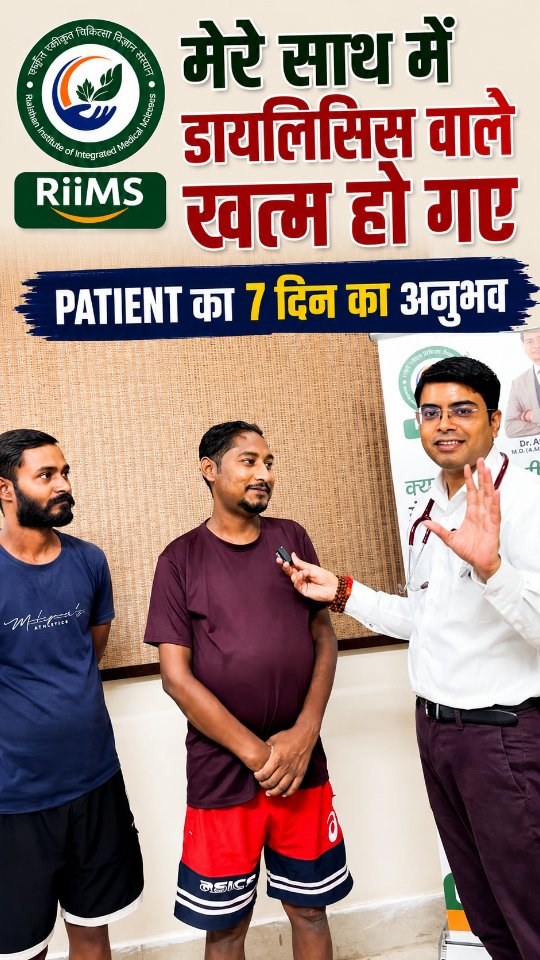
“They explained my reports clearly and gave me a kidney diet I could actually follow at home.”
RKRamesh K.Baraut

Individual experience. Results vary by patient and depend on doctor evaluation.

“Honest guidance without scary promises. My creatinine is being monitored properly now.”
SDSunita D.Baghpat

Individual experience. Results vary by patient and depend on doctor evaluation.

“The video consultation saved us a long trip. The team was patient and answered every question.”
ISImran S.Meerut

Individual experience. Results vary by patient and depend on doctor evaluation.

Watch patient video storiesWatch patient video stories

Frequently asked

Questions patients ask us

It depends on the underlying cause. A doctor reviews your reports, history and medications to plan care. We do not promise guaranteed outcomes.
No. We never make such claims. Dialysis decisions are strictly doctor- and report-led, based on your kidney function.
You choose — video, phone, or an in-clinic visit. Reports can be shared securely before your appointment.
Lifestyle and dietary support is given alongside, and in coordination with, your medical treatment — never as a replacement for it.
Our care team usually responds the same day during working hours. This is not an emergency service.
No. Creatinine is only one number and cannot describe your whole kidney condition on its own. Your doctor reads it together with eGFR, urine protein, blood pressure and your symptoms to understand what is really happening.
Not always. In early CKD, creatinine can still look normal even when other markers are changing. That is why doctors also check eGFR, urine protein and other reports rather than relying on a single value.
No. A dialysis decision is never made on eGFR alone. Your doctor evaluates your symptoms, full reports and overall condition together before advising anything.
No — that is one of the most common fears. Many people live well for years with proper monitoring, lifestyle care and medical guidance. The path depends on the cause, the stage and how consistently the condition is managed.
Feeling well is reassuring, but kidney problems can be present without obvious symptoms early on. Regular check-ups and follow-up reports are the reliable way to know your true kidney status.
Not necessarily. Many patients continue to pass normal amounts of urine even when kidney function has declined. Urine output alone is not a measure of kidney health — your reports tell the real story.
Usually not. Whether — and how much — to limit fruits, potassium or protein depends on your reports and stage, and is decided with your doctor or a renal dietitian. Cutting out whole food groups without guidance is not the answer.
Potassium is decided by a blood test, not by fear. Not every kidney patient has high potassium, and it is not found only in bananas — coconut water, potato, tomato, spinach and dry fruits also contain it. If your doctor advises limiting it, a renal dietitian can plan the right amounts for you.
No. The right amount of water depends on your condition and your doctor’s advice. For some kidney patients, drinking too much can be harmful, so hydration should be personalised rather than assumed.
Not automatically. Not every herbal or Ayurvedic product suits every patient, and some may not be appropriate for kidney disease. Any such support should be taken alongside, and in coordination with, your medical treatment — never as a replacement, and only with a qualified doctor’s advice.
They can. Some painkillers, when used frequently or without medical advice, may affect the kidneys over time. Always check with your doctor before taking them regularly.
No. Stopping or changing any medicine without medical advice is not safe, even if you feel well. Speak to your doctor before making any change to your prescription.
No. Kidney disease can affect children, young adults and people of any age. This is why early awareness and timely check-ups matter for everyone, not just the elderly.
No. Kidney care depends on regular follow-up, because your condition can change over time. Ongoing monitoring helps your doctor catch changes early and adjust your care.
It helps to know your creatinine, eGFR, whether there is protein in your urine, your blood pressure, sugar status, potassium and haemoglobin — and to keep your reports and medicine list handy. Understanding your own numbers helps you and your doctor make better decisions together.
eGFR is an estimate of how well your kidneys are filtering, and a higher number generally means better function. It is read together with your urine protein, creatinine and history — never on its own. Our guide “Understand Your Kidney Reports” explains it in plain language, but your doctor should interpret your specific result.
The RiiMS Renal Plate is a simple way to picture a kidney-friendly Indian meal — balancing vegetables, grains and protein in everyday portions. It is a practical planning tool, not a fixed diet, and the right amounts depend on your reports and stage. Learn the basics in our guide “Kidney Diet & the RiiMS Renal Plate” and personalise it with your doctor or renal dietitian.
Not automatically. Some herbal products are not suitable for kidney patients and can interact with your medicines, so nothing should be started without a qualified doctor’s advice. Any such support is meant to sit alongside your medical treatment, never replace it. Our guide “Ayurvedic Herbs Studied for Kidney Health” gives an honest, balanced overview.
Gentle steps — mindful salt and fluid habits as advised, small frequent meals, rest and tracking your symptoms — can help you feel more comfortable day to day. These are supportive measures, not treatments, and any sudden or worsening swelling should be checked by your doctor. Our guide “Everyday Symptoms in Kidney Disease” walks through calm, practical care.
Protein in the urine can be an early sign that the kidneys’ filters are under strain, which is why it is measured alongside eGFR and creatinine. It needs to be confirmed and quantified with proper testing rather than judged from one result. Our guide “Understand Your Kidney Reports” explains it, and your doctor will decide what it means for you.
It varies from person to person — salt, potassium and protein are common areas to watch, but the right limits depend entirely on your reports and stage. Cutting out whole food groups on your own is not the answer. The RiiMS Renal Plate in our diet guide shows how to balance meals, and a renal dietitian can tailor it to you.
Kidney disease often develops quietly, with little or no symptoms in the early stages, which is why it can be present even when you feel well. Understanding how the kidneys filter helps explain why regular reports matter more than how you feel. Our guide “How Your Kidneys Work” covers this simply.
Start by understanding your key numbers, organising your reports and building steady daily habits — one step at a time, alongside your doctor’s plan. Our “30-Day Kidney Health Plan & Checklist” gives a gentle, structured way to begin. It is a supportive framework to use with your care team, not a substitute for medical treatment.

Take the first step

Talk to a kidney care expert today

Share your reports and get doctor-guided, evidence-aware guidance — no false promises, just honest help.

WhatsApp Now

Visit or reach us

Book an appointment

Send your details and our care team will get back to you. Reports can be shared securely.

Takes ~20 seconds · our care team will call you back

Call us+91 85120 40000Mon–Sat, 9am–7pm
WhatsApp+91 85120 40000Share reports & queries
Clinic addressNear Baraut Medicity Hospital36VW+JHV, Kotana Rd, Baraut, Uttar Pradesh 250611